The Future of Retail Software Is Guidance
For the last few years, almost every conversation about artificial intelligence has been pulled toward the same uncomfortable question: Is AI coming for people’s jobs?
That question gets clicks. It creates fear and gives people something dramatic to argue about online. It also causes a lot of retailers to miss the bigger opportunity sitting right in front of them.
When AI is discussed only through the lens of automation, it starts to feel like the goal is to remove people from the business. That may make sense in certain industries or for certain repetitive tasks, but retail is different. Retail still depends heavily on people, relationships, trust, service, judgment, and the kind of human interaction that cannot be replaced by a screen without changing the entire customer experience.
Yes, AI can automate things. That part is real, and pretending otherwise would be foolish. It can help write messages, organize information, answer basic questions, summarize data, generate content, and handle tasks that used to eat up valuable time. Retailers should absolutely pay attention to those capabilities because time is one of the most valuable resources in any business.
But automation is only one piece of the story, and for many retailers, it may not even be the most important piece.
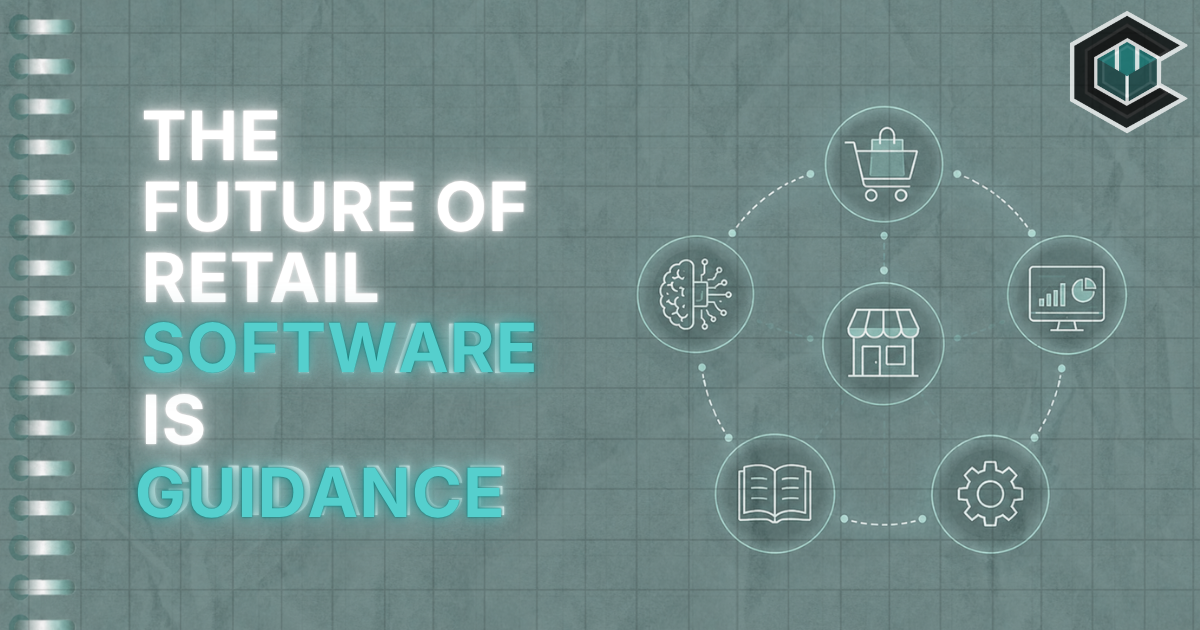
The future of retail software is bigger than automation. It is guidance.
That matters because a great retail business does not run on buttons alone. It runs on people knowing what to do, when to do it, how to do it, and why it matters. The best retail teams are not simply moving transactions across a counter. They are helping customers make decisions, solving problems, explaining options, handling special situations, keeping inventory moving, managing promotions, protecting margins, and trying to create a customer experience that brings people back.
That kind of work needs support and clarity. It needs tools that help the people inside the business perform better. The real promise of AI in retail is not replacing the person behind the counter. The real promise is making that person sharper, faster, better informed, and more confident while keeping the human connection intact.
Retail Still Needs People
Retailers understand something that many technology conversations seem to forget. Customers do not always want to interact with a machine. Sometimes they want speed, and sometimes they want convenience, but there are plenty of moments when they want a person.
A customer walking into a clothing store may need help finding the right size, the right fit, or the right look for an event that matters to them. A customer in a hardware store may need someone to explain which part will actually solve the problem at home. Someone buying a gift may not know exactly what they need, but they know they want it to feel thoughtful. A parent shopping for a child may need patience, suggestions, and reassurance. A customer trying to make a return may need a person who can listen, understand the situation, and handle it with common sense.
That is the part of retail that matters deeply. A lifeless system can process information, but it cannot build trust the way a good employee can. It cannot read the customer’s tone, notice hesitation, or understand when someone needs a little more explanation. Retailers should not be trying to strip all of that out of the business in the name of efficiency.
The better goal is to use technology to strengthen the human side of retail.
Imagine a busy Saturday afternoon in a local furniture store. A customer is asking about delivery options, another wants to understand the difference between two fabrics, a new employee is trying to apply a promotional discount correctly, and the manager is being pulled in three directions at once. That store does not need a robot pretending to care about someone’s living room. It needs a system that can help the employee quickly understand the promotion, explain the options, follow the right workflow, and give the customer a better experience.
That is where guidance becomes powerful. The human still owns the relationship, but the software helps them handle the moment with more confidence.
The Real Problem Is Not Always a Lack of Effort
A lot of mistakes in retail do not happen because employees are careless or because managers are not trying hard enough. They happen because the information needed to do the job correctly is scattered, outdated, misunderstood, or trapped in someone else’s head.
Every retailer has dealt with this. Someone forgets how to process a return. Someone rings up a promotion the wrong way. A new employee does not know where to find a customer note. A manager has to explain the same inventory process for the fifth time in one week. A loyalty program exists, but only one person really understands how to set it up or adjust it. A seasonal promotion worked well last year, but nobody remembers exactly how it was structured.
None of these problems sound dramatic by themselves. Inside a retail business, they create a slow leak. They waste time, create inconsistency, frustrate customers, and force the owner or manager to become the walking instruction manual for the entire operation.
That is exhausting and the customer will absolutely pick up on that exhaustion and chaos, which makes for a bad customer experience.
Retail software has become very good at holding information. It can process sales, track inventory, store customer records, manage products, generate reports, and connect different parts of the business. Those things are necessary. A retailer cannot operate well without them. But many systems still expect the user to already know what to do. The software may have the function, but the employee still has to figure out how to use it, when to use it, and what steps matter.
That is where many retailers get stuck. They do not need another complicated tool that adds more buttons to click. They need software that helps the team understand the work while the work is happening.
A system that can guide an employee through a process, explain a step, provide context, answer a follow-up question, or help create a training guide is doing something more valuable than simply automating a task. It is helping the business become easier to operate.
Training Should Not Depend on One Person Remembering Everything
Every retailer has some version of the training problem. A coffee shop has to teach employees how to handle modifiers, gift cards, mobile orders, loyalty rewards, refunds, opening procedures, closing procedures, and customer complaints. A boutique has to train people on returns, exchanges, sizing, customer profiles, promotions, merchandising, and online order pickup. A pet supply store has to help employees understand product categories, recurring purchases, customer preferences, special orders, and product recommendations. A hardware store, bakery, garden center, bookstore, shoe store, home goods store, bike shop, and specialty retailer all face the same underlying issue. In each of these instances, the work cannot stop. The business needs to keep moving to give the customer the optimal experience.
People need to know what to do, and they need to know it while the store is moving.
Retailers have tried to solve this with binders, checklists, training videos, shadowing, sticky notes, group chats, manager walkthroughs, and the classic line, “Just ask me if you get stuck.” All of those can help, but they are not enough on their own. They’re “pour over” solutions that should only be used in the rarest of circumstances. The pace of retail is too fast, the systems are too layered, and the customer expects too much.
A better model is starting to emerge. The retail system itself should help train the team.
That does not mean replacing the manager. It means giving the manager a stronger tool. If a new employee needs to learn how to create a customer profile, the system should be able to guide them. If someone needs to set up a promotion, the system should help explain the steps. If a team member needs to understand how a loyalty program works, the answer should not require digging through old notes or interrupting three people. The system already has the knowledge, there just needs to be a way for the system to guide that team member through the process.
That kind of guidance takes real pressure off the business because new hires and seasonal employees are not left trying to piece everything together on their own, managers are not pulled away every time someone forgets a process, and owners are not forced to be the answer key for every operational question. Most importantly, the customer gets a smoother experience from an employee who has the support they need in the moment instead of standing there lost, guessing, or waiting for someone else to rescue the transaction.
Guidance Preserves Knowledge Before It Walks Out the Door
One of the biggest hidden risks in any retail business is knowledge loss. A good employee leaves, and suddenly nobody remembers how they handled certain situations. A manager moves on, and small but important details disappear with them. A promotion was successful, but nobody documented the setup. A process was improved over time, but the improvement lived only in someone’s daily habits.
Retailers do not always think of this as a technology problem, but it is. When operational knowledge is not captured, the business has to keep relearning the same lessons. That slows growth and creates unnecessary stress. Most importantly, it creates a bumpy experience for the customer.
A guidance-focused system can help change that. When software can help create guides, document workflows, capture screenshots, explain procedures, and make those resources accessible inside the working environment, the business starts building a living knowledge base. That knowledge becomes easier to update, easier to share, and easier to use when it matters.
This becomes even more important as a retail business grows, because the hands-on approach that works when the owner is involved in every detail can start to strain under the weight of a larger operation. Adding employees, expanding product lines, serving more customers, or opening new departments and locations creates more moving parts, and without clear guidance built into the system, those moving parts can quickly turn into confusion, inconsistency, and unnecessary pressure on the people trying to keep everything running.
Guidance helps turn the business from a place where people constantly ask, “Who knows how to do this?” into a place where the system can help answer the question.
That is a serious advantage.
Better Guidance Creates a Better Customer Experience
Customers may never know what is happening behind the scenes, but they can feel the difference between a confused business and a confident one.
Customers may not see the training, workflows, or internal systems behind the counter, but they absolutely feel the results when an employee knows what they are doing, a return is handled smoothly, a promotion is applied correctly, and the person helping them has the right information at the right moment. That is why guidance matters far beyond employee training; it shapes the customer experience by making the store feel more organized, consistent, and easy to do business with.
When a customer asks about a product, waits in line during a promotion, or tries to use loyalty rewards, they expect the person helping them to have enough support to handle the moment with confidence. They may understand that employees are human and not every answer is instant, but repeated confusion, screen-hunting, manager interruptions, and uncertain explanations quietly shape how customers feel about the business and whether they want to come back.
Retailers spend a lot of money and energy trying to bring customers through the door. They work on marketing, social media, promotions, email campaigns, signage, loyalty programs, and product selection. All of that matters, but the experience can still fall apart if the team does not have the guidance needed to execute well.
That is the practical side of this conversation. AI does not have to be some distant, futuristic concept. It can solve very ordinary problems that cost retailers time, money, and trust every single day.
That is where AI becomes useful instead of intimidating, because it supports the new employee who needs direction, the overloaded manager who needs fewer interruptions, the owner who is tired of being the only person with all the answers, and the customer who simply wants the business to handle the moment correctly. Instead of feeling like some distant technology threatening the human side of retail, AI becomes a practical support system that helps people do their jobs better.
Retailers Need More Than One-Trick-Pony Tools
Retailers have no shortage of software options, and nearly every operational need now has a tool attached to it, from messaging, scheduling, loyalty, inventory, online sales, marketing, reporting, customer communication, and support. The problem is that each tool may solve one narrow issue while adding another layer of complexity, and before long the business is buried under disconnected systems that do not truly work together. That is where the one-trick-pony problem starts to hurt the operation instead of helping it.
A tool that does one clever thing may look impressive in a demo, but retailers live in the real world. They need the pieces of the business to connect. Sales, inventory, customers, marketing, loyalty, reporting, staff workflows, online orders, and in-store activity all touch each other. When those pieces are disconnected, the business gets harder to run. The owner has more dashboards to check, more logins to manage, more processes to explain, and more places for things to fall through the cracks.
When retailers evaluate technology, the better question is not simply what the software can do, but whether it helps the team understand the work, apply the right process, and improve how the business operates over time. A long feature list may look impressive, but the real value comes from software that makes the business easier to run and the team more capable while they are using it.
The real test is whether the software can teach, guide, preserve knowledge, reduce confusion, support the person serving the customer, and help the business operate with more consistency. Those are the questions that matter because the next era of retail software should not feel like a scattered pile of tools; it should feel like a true operating system that helps the entire business run with more clarity, confidence, and control.
The Bright Future for Retail
The future of retail does not have to be cold, robotic, or disconnected from people. In fact, the brightest version of retail may be the one where humans remain at the center, supported by smarter systems that help them do their best work.
A better system helps cashiers learn faster, gives sales associates the information they need to better answer questions, frees managers from repeating the same instructions all day, and allows store owners to move critical operational knowledge out of their own heads and into the business itself. When that happens, customers feel the difference because the person helping them is more prepared, informed, and capable, which is exactly where retail software should be heading.
Automation will keep improving, and retailers should absolutely take advantage of it when it makes sense like reducing repetitive work, simplifying unnecessary admin, and making time-consuming tasks easier to manage. The bigger breakthrough, though, comes when software does more than remove steps from a process and starts guiding the people responsible for running the business, because retailers do not need technology that makes the store feel less human; they need technology that makes the humans inside the business more effective.
Where Coreware Fits Into This Future
This is exactly the future Coreware is building toward. Coreware is not interested in creating a lifeless business solution that leaves retailers alone to figure everything out for themselves. Coreware is building a smarter retail operating system that can help businesses do more than process transactions, manage inventory, and run reports. The goal is to give retailers tools that help them learn, act, improve, and operate with more confidence.
Retailers do not need another one-trick-pony solution bolted onto an already crowded tech stack. They need a true operating partner, one that can help train the team, guide workflows, answer questions, preserve knowledge, support better decisions, and make the business easier to run from the counter to the back office to the online store.
In a recent demonstration, Coreware showed a glimpse of that future by walking through how a guide could be drafted, paired with screenshots, turned into a useful walkthrough, questioned interactively, and refined inside the system itself in just a couple minutes. That is a very different way to think about business software. The system is not simply sitting there waiting for the user to already know what to do. It is becoming part of the learning, training, and operating process.
Retail software should help people do the work, understand the work, and improve the work as the business grows. Automation will keep getting better, but guidance is what turns software from another tool employees have to figure out into a true operating partner that helps the team move with more clarity, confidence, and control.
The strongest future for retail is one where better systems help teams move faster without stripping away the human connection customers still value. When software strengthens the people using it, the business becomes easier to run, the team becomes more capable, operations become cleaner, and the customer experience improves without making the store feel cold or impersonal.
That is the promise Coreware is building toward.
If you want to see how Coreware is building toward this future, visit coreware.com and take a closer look at how we are helping retailers simplify operations with smarter, more connected, and more engaging retail solutions. You can also see Coreware in action creating spontaneous user guides by clicking the link below; this brief demonstration is the real-world example behind the ideas covered in this article. The future of retail software should help your team work with more clarity, serve customers with more confidence, and give your business a stronger foundation to grow.