The Coreware Blog
Stay updated with the latest industry insights, practical advice, and expert opinions to help you stay ahead.
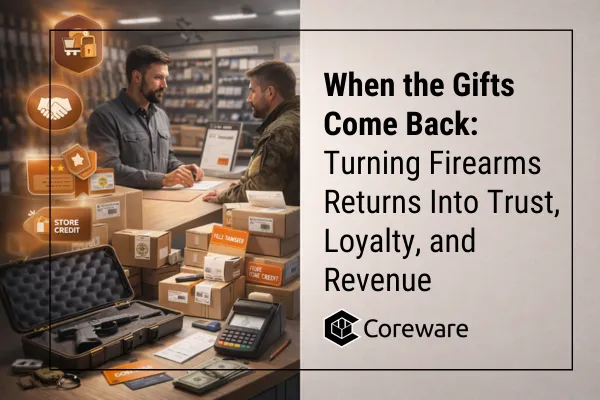
When the Gifts Come Back: Turning Firearms Returns Into Trust, Loyalty, and Revenue
The day after Christmas is quiet in a way that feels different from any other day of the year. The rush is over. The phones slow down. The parking lot isn’t full. And for many firearms retailers, a new phase begins, returns.
Some customers bought the wrong accessory. Some received a gift they didn’t ask for. Some realized the product didn’t fit their setup, their skill level, or their expectations. None of that is unusual. Returns are a normal part of retail, and they’re especially common right after the holidays.
What is unusual is how much opportunity most retailers leave on the table during that moment. Returns don’t have to be a loss. They don’t have to be tense. And they don’t have to be treated like a problem to get through as quickly as possible. When handled correctly, returns can become one of the most trust-building interactions you’ll ever have with a customer, and in many cases, they can lead directly to additional sales and repeat business.
Let’s talk about how firearms retailers can handle returns in a way that protects compliance, respects margins, and still turns a potentially negative moment into a positive one.
First: Understand the Headspace of the Customer
Before policies, procedures, or systems, it helps to understand what’s happening on the other side of the counter.
A customer returning an item after Christmas is often:
• Slightly uncomfortable
• Unsure of the rules
• Worried they’re going to be told “no”
• Hoping the process won’t be awkward
They’re not coming in hot. They’re usually coming in cautiously.
How that first interaction goes sets the tone for everything that follows.
A calm, confident, professional approach does two things immediately:
It lowers the customer’s guard
It reinforces that your shop knows exactly what it’s doing
That matters more in firearms retail than almost anywhere else.
Returns Are a Test of Trust
Anyone can sell during a holiday rush. Returns are where trust is either reinforced or quietly lost.
Customers remember:
• Whether the rules were clear
• Whether staff were confident or unsure
• Whether the process felt fair
• Whether they felt respected
A smooth return experience signals that your operation is disciplined and customer-focused. A messy one signals the opposite.
And here’s the thing many retailers overlook: customers who experience a fair, professional return are often more loyal than customers who never had a problem at all. That moment becomes proof that you stand behind what you sell and how you operate.
Keep Policies Clear and Consistent
This is more than the experience being lenient or strict. It’s about being clear.
Firearms retailers deal with unique realities:
• Serialized items
• Compliance requirements
• Manufacturer restrictions
• Safety considerations
• State and federal regulations
Your return policy should reflect that reality in plain language.
Customers don’t expect firearms retailers to operate like big-box stores. What they do expect is consistency. If your staff has to “check with someone” every time a return comes in, confidence erodes fast.
Make sure your team understands:
• What can be returned
• What cannot be returned
• Time windows
• Condition requirements
• Refund vs store credit rules
When staff speak with certainty, customers relax, even if the answer isn’t what they hoped for.
Use the Return Conversation to Learn
Every return carries information.
Instead of treating it as a transaction to process and move on from, treat it as a brief diagnostic moment.
Without interrogating the customer, you can learn:
• Why the product didn’t work
• Whether expectations were unclear
• If sizing, compatibility, or use case was misunderstood
• If the product was a poor fit for the customer’s experience level
This is the perfect opportunity to gain insight.
Those insights can help you:
• Improve staff recommendations
• Adjust product descriptions
• Spot trends in mismatched purchases
• Identify accessories that need clearer explanation at the counter
Over time, this reduces future returns and improves customer outcomes.
Turn Returns Into Better Recommendations
One of the biggest missed opportunities during returns is re-engagement.
If a customer is returning an item, it means they’re standing in your store. They’re already there. That’s a chance to help them get it right this time.
Instead of stopping at “refund processed,” consider:
• Asking what they were trying to accomplish
• Clarifying how they plan to use the product
• Identifying what didn’t meet expectations
This naturally opens the door to recommending a better-fit alternative.
The key is tone. This isn’t an upsell. It’s guidance.
Many customers actually want help at this point. They don’t want to repeat the same mistake.
When the recommendation feels thoughtful and informed, trust deepens, and yes, additional sales often follow.
Store Credit Isn’t a Loss—It’s a Second Chance
In many cases, store credit makes more sense than refunds. When positioned correctly, it doesn’t feel restrictive, it feels flexible.
Store credit:
• Keeps value in your ecosystem
• Encourages a return visit
• Creates another touchpoint with your brand
• Reduces margin loss compared to cash refunds
The key is presentation.
If store credit is framed as a limitation, customers resist it. If it’s framed as an easy way to find something that actually fits their needs, many customers accept it willingly.
This works especially well with:
• Accessories
• Apparel
• Optics
• Maintenance products
• Range gear
And yes, many customers end up spending more than the original amount when they come back.
Train Staff to See Returns as Service, Not Failure
Returns often frustrate staff because they feel like a reversal of effort. That mindset matters.
If returns are framed internally as a problem, customers feel it immediately. If they’re framed as part of service, the energy shifts.
Staff should understand:
• A return doesn’t mean they failed
• Helping a customer through a return is part of the job
• A calm, professional return builds credibility
This is especially important in firearms retail, where confidence and competence are part of the brand experience.
A well-handled return can leave a stronger impression than a routine sale.
Protect Margins Without Being Rigid
There’s a balance to strike here.
You don’t have to accept every return. You don’t have to bend rules. You don’t have to eat losses unnecessarily.
What you do need is a system that:
• Applies rules consistently
• Tracks returned inventory accurately
• Prevents reselling items that shouldn’t be resold
• Clearly documents the transaction
This protects your business and your reputation.
When systems support the process, staff can focus on the customer instead of paperwork or guesswork.
Returns Are a Branding Moment
Most retailers think branding happens in marketing. In reality, branding happens at the counter.
Returns are one of the few moments where a customer sees how your business behaves when things aren’t perfect.
A return handled with clarity, confidence, and professionalism sends a powerful message:
• This store is organized
• This store is fair
• This store knows its space
• This store can be trusted
That’s not theoretical. That’s how loyalty is built in real life.
The Bigger Picture
The day after Christmas isn’t about what came back, it’s about what stays.
The customer who felt respected.
The customer who learned something.
The customer who left with the right product.
The customer who decided your shop is where they’ll go first next time.
Returns are unavoidable. Lost opportunity is not.
Handled correctly, returns can become one of the most overlooked tools in a firearms retailer’s playbook, turning friction into trust, and trust into long-term business.
If this kind of operational clarity matters to you, it’s often a sign that you’re thinking beyond the transaction and toward the system behind it. To learn more about how Coreware helps firearms retailers operate with confidence and consistency, visit coreware.com.
Survive and thrive.
