The Ghost of Black Friday Future Has Some Advice
In A Christmas Carol, the last spirit shows Scrooge a future that has not happened yet, and the whole point of the visit is that he still has time to change it. I have always liked that idea because it is exactly the kind of visit most retailers could use right before Black Friday. If you could hear from yourself a week after the weekend, once the doors are locked and the reports are printed, I think you would hear a fairly specific list of things you wish you had handled while there was still time.
Most of that list would not be about bad ideas, but about good plans that ran into a busy day, like a transfer counter that backed up by mid-morning, a promotion that one employee rang up differently than another, a website that slowed down at the worst possible hour, or a printer that ran out of paper while the line was ten people deep. None of those problems are unusual, and almost all of them are easier to prevent in the days before Black Friday than they are to fix while customers are standing at the counter. A few days is not much time, but it is enough to handle most of what would otherwise end up on that list.
So think of this article as that note from the week after, written while you can still do something about it. It covers the mistakes that tend to show up when a firearms retailer or range has its busiest day of the year, along with what can still be done in the few days left. There is also a Black Friday Battle Pack that goes with it, which includes a countdown checklist, contingency plans, a staffing and break template, a promotion setup sheet, a short huddle script, and a worksheet for reviewing the weekend afterward.
The Busiest Retail Day Is Usually the Busiest Day for NICS Too
Retailers already know Black Friday is busy, but the background check numbers show just how concentrated that day can be for firearms. According to the FBI's own NICS data, Black Friday was the single highest-volume day of the year for NICS in 2024, when 169,906 checks were initiated, and the day after Thanksgiving has repeatedly ranked among the system's busiest days for years. NSSF reported 165,183 checks on Black Friday 2025, compared with 9,312 on Thanksgiving Day and between about 80,000 and 86,000 on each of the three weekdays before it. Those numbers include more than retail sales, since they also count things like permit checks, but they make it clear that a lot of people are trying to buy firearms on the same day you are.
That volume is the reason NSSF has worked with retailers to spread special offers across the week leading up to Black Friday rather than packing everything into one day, since a single overloaded day can mean longer than normal wait times. Even this late, a retailer can still decide whether some firearm offers should start earlier in the week or continue through the weekend. Spreading things out does not have to mean giving away more, because the same offer running across several days can serve the same customers with less pressure on the counter and fewer people waiting on a response.
It also helps to look at how your checks are actually submitted. The FBI reports that more than 92% of NICS checks in 2024 were processed through NICS E-Check, which lets a dealer submit the check online instead of calling the contracted call center. The FBI describes E-Check as available 24 hours a day, seven days a week, while phone service runs on set hours, and E-Check also lets the dealer retrieve a final status without waiting on a callback. This applies in states where the FBI handles checks directly, since 15 states served as full point-of-contact states in 2024 and run their own process, so a retailer in one of those states should confirm how its state agency handles high-volume days.
Plan for the Customer Who Gets a Delay
Most checks come back quickly, and the FBI reports that it maintained an immediate determination rate of at least 90% in every month of 2024, which means the large majority of traditional checks received a final answer within seconds to minutes. On a busy day, though, even a small percentage of delayed responses can add up to a real number of customers who leave without their firearm, and those customers deserve a clear explanation instead of a confused one. How that conversation goes often decides whether the customer comes back to finish the purchase with you or goes somewhere else.
The rules around delays are worth reviewing with everyone who works the counter before Black Friday, not during it. Federal law generally gives NICS three business days to research a delayed transaction, and after that period a dealer may be allowed to transfer if no denial has been received, though that is a decision federal law leaves to the dealer and state law may impose different requirements. For buyers under 21, that research period can be extended to as many as 10 business days. ATF also notes that a NICS check is valid for 30 calendar days from when it was initiated, so a customer who does not return within that window will need a new check.
There is another detail that tends to surprise customers during the holidays. According to an ATF answer published by NSSF, when a delayed transaction is later approved, the firearm cannot simply be handed to a spouse or family member who stops by to pick it up, because the original buyer has to return and recertify on the same Form 4473. A customer who hears that in a calm conversation on Friday is far less likely to be frustrated on Monday than one who finds out at the counter. I would make sure every employee can explain the delay process the same way, and I would decide ahead of time how the store will follow up when a final answer comes in.
Most Long Lines Start at the Paperwork
When a firearms retailer gets backed up on Black Friday, the slowdown is usually at the transfer counter rather than the register, since each firearm sale involves a Form 4473, identification, a background check, and a careful review before the firearm leaves the building. That process cannot be rushed in the same way a cashier can ring up a box of ammunition faster, and trying to rush it is where the real risk shows up. A mistake made on a crowded Friday can still be sitting in the store's records when they are reviewed during an inspection, long after everyone has forgotten how long the line was.
ATF's own inspection results show where things tend to go wrong even on normal days. In fiscal year 2024, the most frequently cited violations included failing to complete forms as prescribed, failing to obtain a completed Form 4473, failing to record NICS contact information, missing transferor signatures or dates, and failing to record identification or firearm information on the form. Those are not exotic mistakes, and they are exactly the kind of details that can slip when a counter is crowded and everyone is trying to move people along.
When those mistakes happen on a busy day, the cause is usually the process around the counter rather than the person filling out the form. A good employee who is handling three customers at once while answering the phone is going to have a harder time than the same employee working one transaction with a clear routine. Retailers can help by deciding before the weekend who handles transfers, keeping enough people trained on that process to cover breaks, setting a simple habit of having each completed form reviewed before the firearm goes out, and making it clear that nobody will be criticized for slowing down to get the paperwork right. Every shop should follow ATF rules and its own state law, and if anyone has questions about a specific requirement, the week before Black Friday is a better time to get a firm answer than the middle of the rush.
It can also help to separate the parts of the visit that do not need to happen at the transfer counter. A customer can often choose the firearm, look at optics or holsters, talk through ammunition, and finish the non-firearm part of the sale with someone else, which leaves the transfer counter focused on the work only it can do. Even small changes like having pens, clipboards, or tablets ready, keeping the line organized, and telling customers roughly how long the wait will be can make the experience feel calmer for everyone involved.
Everyone Should Know the Offer Before the First Customer Asks
A promotion that lives in the owner's head on Wednesday tends to get interpreted several different ways by Friday afternoon. One employee thinks the discount applies to an entire category, another thinks a particular brand was excluded, and someone online sees a price on the website that is different from the sign in the store. None of that is anyone's fault in particular, because the details simply were not written down and shared before the store got busy.
The fix is mostly a matter of finishing the promotion before the weekend instead of during it. Each offer should have a clear set of included items, any exclusions, a start and end time, the channels where it will be promoted, and a decision about whether it applies online, in the store, or both. If the pricing is entered ahead of time and set to begin and end on schedule, nobody has to remember to change prices at opening or put them back on Monday morning, and employees do not have to make judgment calls at the register while a line is waiting.
It is worth taking a few minutes to test the promotion before customers ever see it. Ring up a few sample transactions, place a test order online if you can, and check that the sale price, the receipt, and the website all say the same thing. A pricing mismatch between the counter and the website is the kind of problem that a customer notices immediately, and it is much easier to catch on Tuesday or Wednesday than to explain on Friday.
Then share the offer with the people who will be answering questions about it. A short meeting before the store opens, or even a one-page sheet at each register, can cover what is on sale, what is excluded, how long it runs, and what to say when something is sold out. When every employee gives the same answer, customers trust the promotion more and the staff spends less time checking with a manager.
Know What You Have Before You Advertise It
Few things frustrate a Black Friday customer more than driving to a store for an advertised item and finding out it sold out an hour after opening or was never really in stock to begin with. That situation is sometimes unavoidable when demand is strong, but it becomes much more likely when the advertised item was chosen without a close look at how many were actually on hand and what was already committed to layaways, special orders, or online orders. A customer who leaves empty-handed after seeing an item advertised tends to remember that more than any deal they did find.
Before the weekend, I would take a fresh look at the quantities behind every item featured in an email, on social media, or in the store. If only a handful of a particular firearm is available, that is worth knowing and possibly worth saying, because customers generally respond better to a limited quantity that was clearly stated than to a deal that seems to have disappeared. It also helps to decide ahead of time what employees should offer when something does sell out, whether that is a comparable model, a special order, a rain check, or simply an honest answer.
The same thinking applies online. A website that keeps selling an item the store no longer has creates a follow-up problem that lands on someone's desk the next week, along with a customer who expected one thing and got another. Making sure that online and in-store inventory are reading from the same numbers, or at least checking the most heavily promoted items throughout the day, can prevent a lot of uncomfortable phone calls after the weekend.
The Website Opens Before the Doors Do
For many shoppers, Black Friday starts on a phone long before anyone pulls into the parking lot. NRF reported that 85.7 million people shopped online on Black Friday 2025, and its October 2026 survey found that 64% of consumers say they are likely to wait until Thanksgiving weekend to do most of their holiday shopping, compared with 51% five years ago. Even a customer who plans to buy in person will often check the website first to see what is on sale, what is in stock, and what time the store opens.
That makes the speed and accuracy of the website more important than it might seem. A study commissioned by Google and prepared by Deloitte found that a 0.1-second improvement in mobile site speed was associated with an 8.4% increase in retail conversions. Baymard Institute's research found that 17% of shoppers who abandoned an online purchase, setting aside people who were just browsing, did so because the website had errors or crashed, and the average documented cart abandonment rate across the studies it tracks is about 70%. A retailer cannot rebuild a website in three days, but it can test the main pages, make sure Black Friday items are easy to find, confirm that checkout works on a phone, and make sure store hours and holiday policies are clearly posted.
Firearms add another layer to online orders, because a firearm purchased online still has to go through a licensed dealer and a background check before the customer receives it. Orders that arrive without the information needed to complete that step can sit untouched while the store is busy, and the customer may assume nothing is happening. I would decide before the weekend who is responsible for reviewing online firearm orders each day, how customers will be contacted when something is missing, and how the store will handle the transfers that pile up after the weekend so those customers are not left waiting longer than necessary.
When firearms are shipped between licensees, federal rules require the shipping dealer to verify the receiving dealer's license, generally by obtaining a certified copy of it. Retailers who expect to send or receive more transfers than usual this time of year should make sure that paperwork is organized and current before the volume increases. Again, the specific requirements depend on federal and state law, so the right time to confirm anything you are unsure about is before the orders come in.
Plan for the Things That Break on Busy Days
Equipment and systems are under the most strain on the busiest day of the year, which is also the day when a failure costs the most. An internet outage, a card processor problem, a receipt printer that jams, or a register that freezes in the middle of a transaction can turn a busy day into a stressful one very quickly. The retailers who handle those moments well are usually not the ones with perfect equipment, but the ones who decided ahead of time what they would do if something stopped working.
A few questions are worth answering before Friday. If the internet goes down, is there a backup connection, such as a mobile hotspot, and does anyone know how to switch to it? If cards cannot be processed for a period of time, what is the store's policy on cash, holds, or asking customers to come back? If a background check cannot be submitted the normal way, does someone know the alternative and who to call? Writing those answers down and posting them where managers can find them takes very little time, and it keeps the decision from being made in a hurry.
The simple things deserve a check as well. Extra receipt paper, label stock, printer ink, pens, and charging cables should be counted and placed where employees can reach them without leaving the floor. Any register or tablet that has been acting strangely should be dealt with now, and it is a good idea to restart and test every device the day before so that updates and other surprises do not show up at opening.
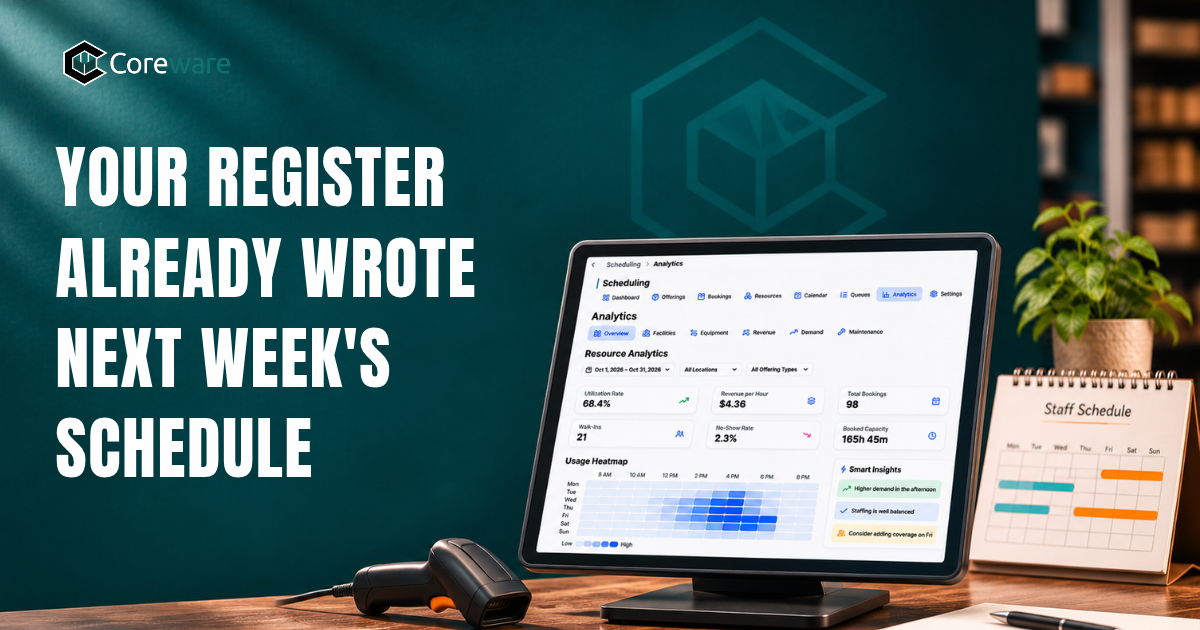
Staffing is another area where a backup plan makes a difference. Someone will probably call out sick over a holiday weekend, and the schedule should already show who can come in or how responsibilities will be shifted if that happens. Breaks matter too, because employees who work a long, crowded shift without a real break are more likely to make mistakes and less likely to give customers the attention they deserve, so I would put breaks on the schedule rather than leaving them to whenever things slow down.
Crowds also deserve some thought from a security standpoint. A busy store means more people near display cases, more firearms out of the case at the same time, and less attention available for any one customer. Retailers can limit how many firearms are out with a single customer, keep counters staffed, and make sure cases are locked when nobody is standing at them. NSSF and ATF run a joint program called Operation Secure Store that offers security resources for licensees, and it is worth remembering that federal rules require licensees to report the theft or loss of a firearm to ATF within 48 hours of discovering it, which is one more reason to know exactly what is in the case at the start and end of each day.
Gift Cards and Range Time Make Easy Gifts
Many of the people who walk into a gun shop between now and Christmas will be shopping for someone else, and some of them will not know exactly what that person wants. NSSF notes that ATF recommends considering a gift certificate from the retailer instead of buying a firearm and giving it as a present, so the recipient can choose the exact firearm they want and there is no question about who the actual buyer is on Form 4473. That makes gift cards more than a convenience for firearms retailers, because they offer a simple and clear option for a customer who wants to give a firearm without guessing.
Gift cards also fit what many people already want to receive. NRF's October 2026 survey found that gift cards were at the top of the wish lists for Gen X and Baby Boomers, at 46% and 59% respectively. Before Black Friday, it is worth making sure gift cards are stocked, displayed where customers will see them, and easy for every employee to sell, whether a customer wants one at the counter or online.
Ranges have a similar opportunity with experiences. NRF found that 27% of holiday shoppers plan to give an experiential gift this year, up from 19% five years ago, and lane time, memberships, and training classes fit that category well. The risk for a range is that a busy weekend can overbook lanes or classes, so I would review capacity, decide how waitlists and walk-ins will be handled, and make sure customers know whether a gift certificate can be used right away or will need to be scheduled after the holidays.
The Weekend Does Not End on Friday
It is easy to put all of the attention on Black Friday and treat the rest of the weekend as an afterthought. NRF's survey of the 2025 holiday weekend found that 62.7 million people shopped in stores on Saturday, a record 32.6 million shopped in stores on Sunday, and 75.9 million shopped online on Cyber Monday. Small Business Saturday is also a natural fit for an independent gun shop or range, since the day exists specifically to encourage people to support local businesses.
That does not mean every day needs its own promotion. It means the plan should cover the whole weekend, including who will be working, what will still be on sale, what happens to online orders that come in Sunday night, and how the store will handle the background checks and transfers that carry into the following week. A store that is well prepared on Friday and unsure about Saturday can lose much of the advantage it worked to create.
The weekend is also one of the best opportunities all year to meet new customers, and many of those people will not come back unless the business gives them a reason. One retailer interviewed by Shooting Industry described using events and giveaways to collect email addresses and phone numbers rather than simply giving discounts away, which is a reasonable approach as long as customers are clearly opting in. A short thank-you email, an invitation to an upcoming class, or a reminder to request a review can turn a one-time Black Friday shopper into someone who returns in January.
Returns are worth reviewing too, especially because firearms are not handled like other merchandise. A firearm that comes back into the store falls under the same federal recordkeeping rules as any other firearm the store receives, and state law may add its own requirements, so the policy should be clear and consistent before customers ask about it. Clearly posting what can and cannot be returned, and making sure employees explain the policy the same way, can prevent a lot of disappointment in the weeks after the holidays.
The Week After Is When You Find Out What Happened
The note from the week after Black Friday should not only be about problems. It should also tell you what worked, which offers customers responded to, which channels brought people in, how many new customers you met, and where the store ran short on time, staff, or inventory. That information is most useful while it is still fresh, before the details fade and the whole weekend gets summed up as busy.
I would put a time on the calendar for that review now, before Black Friday begins, and invite the people who were actually on the floor. Look at the sales, the discounts given, the redemptions for each offer, the online orders, the delayed transactions that are still open, the transfers that are still waiting, and the moments when something did not go the way it should have. The worksheet in the Battle Pack is built for exactly that conversation, and it is much easier to fill out on Tuesday than to reconstruct a year later.
Scrooge woke up with time to change what he had been shown, and most retailers reading this still have a few days to do the same. Most of the problems in this article cannot be eliminated completely, but they can be made much smaller by fixing the handful of things you already suspect could go wrong while there is still time. The Battle Pack checklist is a good place to start, since it puts most of what this article covers on a few pages you can print and hand to the people working with you.
Coreware gives firearms retailers and ranges a way to handle much of this inside one system that runs both the store and the website. Promotions can be scheduled ahead of time with start and end times, online and in-store pricing come from the same place, and promotion reporting shows what each offer actually did once the weekend is over. Gift cards, follow-up marketing to new and returning customers, and firearm orders that still need FFL information can all be managed in the same place, so fewer details get lost in the rush. Coreware can help with things like this, and can do even more. To learn more, visit coreware.com.